
Advocate Feature: Mindy Woods and Brian Kulas for Homelessness Awareness

In the US, more than half a million individuals are homeless on a typical night. And as the temperatures drop and the days shorten, the need for housing shelters and food assistance increases.
November 16-24 is Hunger and Homelessness Awareness Week, an opportunity to reflect on what we all can do to help improve lives in our communities. Here are two Living Proof advocates who are doing just that.
Sharing Lived Experiences to Make a Difference
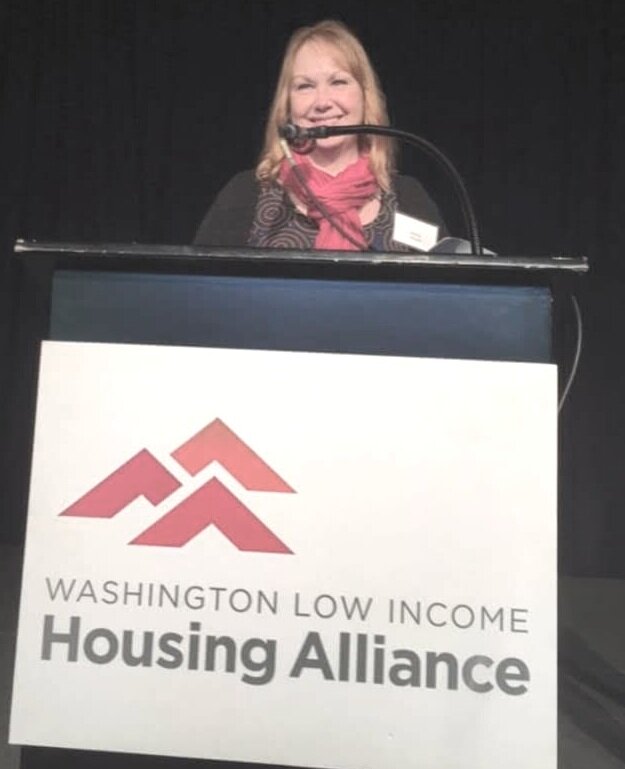
Located in Washington state, Mindy Woods is a Gulf War veteran, a single mother and an advocate for affordable housing. She tells her stories of experiencing homelessness in hopes of saving shelters from major cuts in funding. Though first keeping her homelessness a secret—ashamed, embarrassed and fearful of how others would react—Mindy eventually decided to speak out to improve resources, funding and affordability for others experiencing homelessness. For Mindy, being an advocate with her story means “helping people understand how prevalent homelessness is. And that we need to come together as a community.”

On the opposite coast, in New Jersey, Brian Kulas’ advocacy addresses the complex intersection of issues often experienced by people who are homeless: funding of affordable housing, addressing mental health issues, access to rental subsidies and more. Brian is a recent graduate of the Garden State Leaders Program and he uses his knowledge and experiences to advocate for underserved residents at the New Jersey Coalition to End Homelessness.
The Power of Focusing and Crafting Advocacy Stories
How do Mindy and Brian apply the best practices of advocacy storytelling when they speak? Mindy says staying focused on her goal helps her navigate emotions:
“I still choke up talking about this. It’s extremely painful to be a parent and feel that I have failed in the ability to keep a safe roof over my son’s head. So, when I tell my story, I now accept that sometimes it’s going to be emotionally raw . . . and that’s okay. I take a deep breath and focus on the higher good that can come out of this.”
While preparing to speak at a press conference advocating for increased access to the Supplemental Nutrition Assistance Program (SNAP), Brian told us he learned the importance of finding a hook and getting the audience’s attention. After the press conference, Brian went home to watch the video of himself and soon realized even though he had spoken for three to four minutes, they had only chosen to highlight one sentence: “If I did not receive food stamps, my refrigerator would echo.” Brian says:
“That was the first time I realized that there are certain things that stick and others that don’t. I still use ‘My refrigerator would echo’ when I speak on the issue because it seems to really strike home with a lot of people—rather than just saying, ‘We need more funding for SNAP benefits.’”
Brian and Mindy demonstrate that focus, honest emotion and crafted language are key to effective, well-told advocacy stories—and we thank them for sharing their stories and insights with us.
Read more of Mindy and Brian’s stories and their important work in the new edition of Living Proof: Telling Your Story to Make a Difference.
ABOUT LIVING PROOF ADVOCATES
Living Proof Advocates is a series on the Story+Advocacy blog highlighting the work of advocates who are sharing their personal stories to create change and make a difference in the lives of others.
Policies are not fixed; they can be shaped—and reshaped—by the voices and lived experiences of the people they affect.

In a guest post, advocate Jim Kuhn shares why it is so important for members of the rare disease community to share their lived experiences.
“Legislators often don't understand the context: these women are our military partners. They were recruited, trained, deployed and put in harm's way under our operational direction.”

The organization knew that Barry was valuable to them achieving their advocacy goals, because he had lived experience as a veteran—as well as a passion for the desert that spans more than five decades.

“I’ve found that one of the best ways to encourage people in making healthy choices is to understand the story they are telling themselves about their lives.”

“By shifting my focus from anger to persuasion, I began to see more people engaging with the issue. Conversations became more productive. Skeptics weren’t just pushed away or ignored; they were invited to understand.”
“Youth need to be at that table, sitting with executive leaders, emphasizing that we have a very different perspective and they can't be making decisions for us.”

Without taking the time to reflect and explore, I might have forgotten that memory and missed the connection it holds to one of my deep beliefs about the value of museums (or all encounters with art and artifact, for that matter).

What personal stories do we tell about our connection to the natural world?

“It was such a safe space LPA had created.”

“Five years ago, when at my lowest point, I discovered the true power of storytelling. It not only saved my life but has helped countless others.”
“Those amazing, rewarding and often heartbreaking experiences helped me realize my purpose.”

Compared to the more serious health conditions or life circumstances that many advocates are managing, will my advocacy be viewed as overblown or overwrought?

“I’m speaking out because I care about my community. We can no longer afford to ignore.”

Listening to it nonstop for more than a decade, even in the background of my consciousness, is exhausting. I want the noise to stop.
“The workshops helped us nurture a culture of transparency and trust.”
“I’ve learned how to move audiences from apathy to empathy to action.”
Redefining the meaning of “senior moment.”
Every newborn is different. So is every birth. No one knows this better than midwives and doulas.
The rape-kit backlog is what drove Natasha to speak out back in the 90s—and she’s been telling her story and making a difference ever since.

Need proof of how healthy choices can impact your physical and mental wellbeing? Meet Marc Ramirez.

For whom or what will you advocate in 2020? How will you share your story?

No surprise: stories about advocates and organizations resonated deeply with our readers this year.

World AIDS Day reminds us that HIV has not gone away.

In the US, more than half a million individuals are homeless on a typical night.
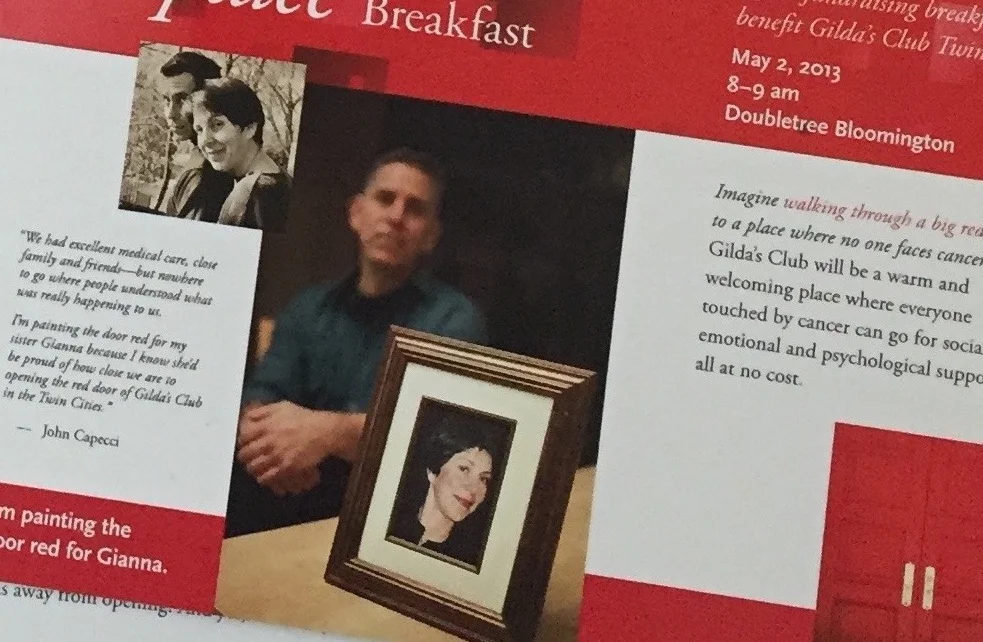
When is giving back also an act of self-care?

In 2006, Bill Butler was preparing for surgery to relieve chronic lower-back pain when he accidentally overdosed on methadone, the opioid his doctor had prescribed.

Shame is a powerful silencer. That’s why Mary sharing her story is so important.
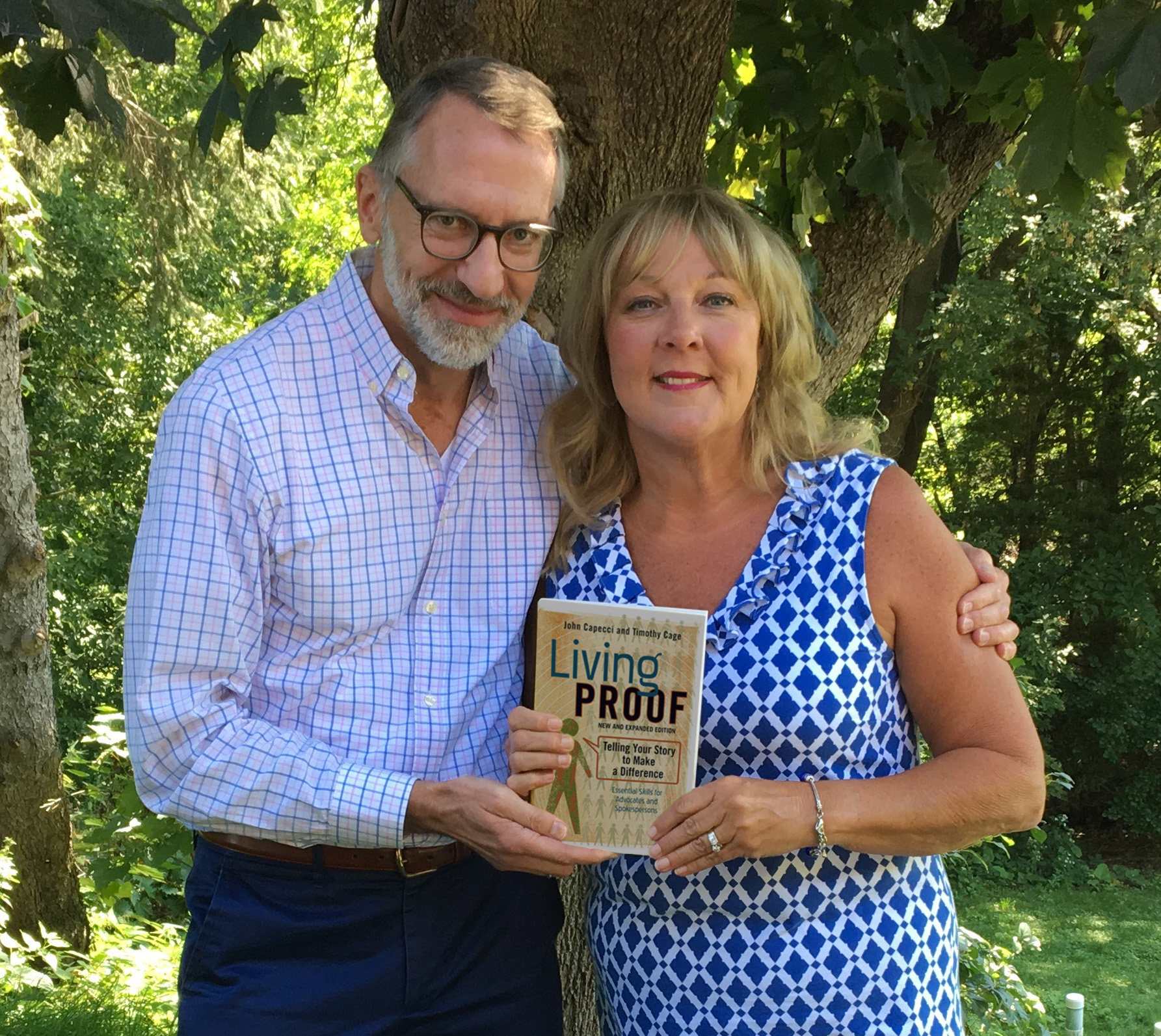
I love coincidences—especially those involving people moving in and out of our lives.
This series gives us an opportunity to check in with some of the advocates we talked to over the course of our book’s three editions and 14 years, get an update on their work and see where exactly their paths have taken them.