
Coach Feature: Rachel Holmes and Anti-hunger Advocacy
Rachel Holmes, Director of Advocacy and Community Engagement for The Food Group, an anti-hunger organization based in St. Paul, Minnesota, became certified in LPA coaching methods to support advocates with lived experience of food insecurity. She recently shared with us how storytelling-for-advocacy fits into her work with The Food Group.
Tell us about the Food Group and your role in the organization.
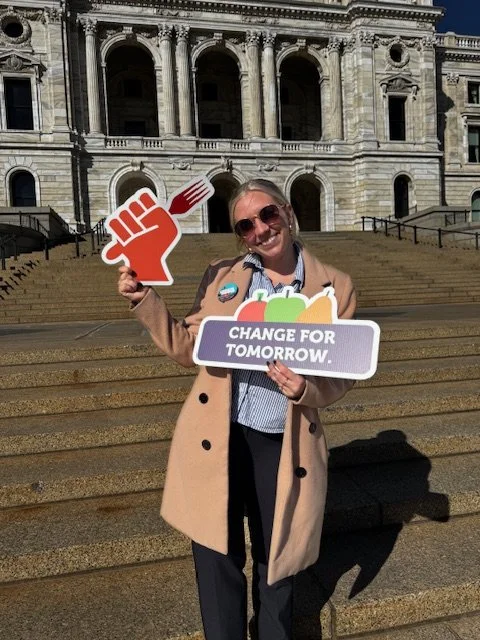
The Food Group is an anti-hunger organization that recognizes that meaningful hunger relief work requires a holistic approach. We work all the way across the food system to ultimately build a better and more equitable food system, from production to distribution.
We have an incubator farm that's based in education to help the next generation of farmers grow all of our food, we operate discounted grocery programs, we are a food bank and we work with over 300 food shelves in Minnesota to provide funding and resources.
While we know that getting food to people today is very important, a part of our work is also acknowledging that broader food justice really comes from advocating for a better tomorrow. We do a lot of policy and advocacy work, and that is where my role comes in. I lead our policy and community engagement team. We work to enact state and federal policies that will help people have better access to healthy, nutritious and culturally familiar foods.
How does that role intersect with storytelling?
Food shelf visits in Minnesota have skyrocketed since 2019. There are more people who need resources. There's a lot more work that needs to be done. So advocating for state solutions like increased funding for food shelves and advocating at the federal level to protect programs like SNAP is more important than ever.
We know from years and years advocating at the Capitol that the most effective testimonies are ones rooted in personal experience. It's something that can't be replicated by data or lobbyists. It causes a shift we see frequently: lawmakers will lean in more, they'll put their phones down, they will make eye contact. They'll be more focused when we have people who testify and tell their own stories. Same thing with the media.
When we started thinking about how to be more effective anti-hunger advocates, it became clear that we needed a group of lived-experience experts that were equipped and ready to advocate alongside us and in partnership with us.
So, four years ago, we launched our lived-experience leadership cohort, about 8 to 10 lived-experience experts annually from around the state that work with us for six months. We equip them with the tools that they need to share their stories, advocate, testify, speak to the media and to really grow into advocates on their own.
You can't change the food system for the better alone. It can't be done by one organization, one staff or one lobbyist. It requires everyone to show up at the table, and we could not do it without those who are most impacted centered in the conversations about change. We recognize that our work with lived-experience experts is truly the core of our advocacy and policy work.
Have you noticed an impact on your advocacy success since transitioning to an approach rooted in lived experience and storytelling for advocacy?
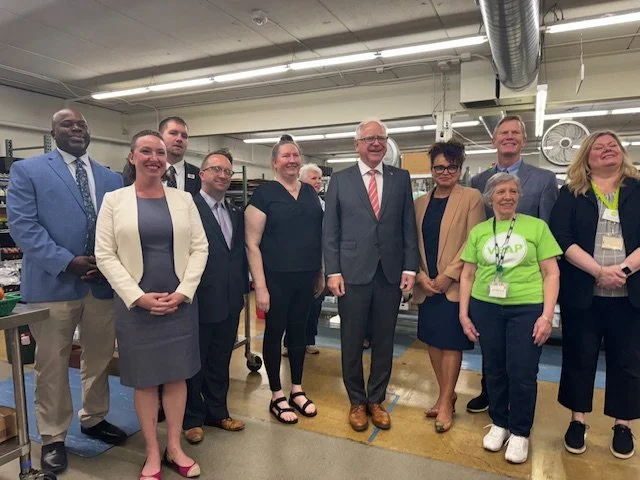
Yes, absolutely. We have truly become a more recognized and a more credible organization because of it. We have had more media opportunities to talk about the work we do, more invitations to press events and more meetings with lawmakers.
All in all, the attention to the issue has significantly improved since working with our lived-experience experts and equipping them to be their own advocates. We attribute a lot of our successes to our advocates being willing to share their stories and talk about the issue in a more meaningful and personal way.
Our lived-experience experts have shared their stories at press conferences with our governor, state representatives and senators. The way that their stories have touched really important people, it has just been incredible to watch. And it's also been incredible to see the follow up that comes with that.
We have some lived-experience experts who’ve developed great relationships with their lawmakers, which led to the lawmakers reaching out for their contact information to stay in touch.
One of the lived-experience experts who shared their story had one of our senators reach out and work with our state agency to help solve an issue that she was having with her benefit paperwork. To see the true, real-life impact first hand has just been remarkable. It just proves that storytelling bridges relationships.
How has your work and your training with Living Proof Advocacy impacted your storytelling for advocacy?
The LPA certification training has reaffirmed the power of our lived-experience experts, and it was exactly the affirmation we needed. It helped us know that we were heading in the right direction with our advocacy program.
We're a busy organization and our capacity as a staff is limited. So being able to go through this coaching certification training and have the resources, tools, worksheets, PowerPoints, everything ready and prepared for me to go in and talk to our cohort about storytelling has just been hugely helpful for us as an organization. Everything that we've heard thus far about implementing the tools and resources within our cohort has been positive. They've loved it. The LPA tips, training, resources and support was exactly what our advocates had been asking for.
What lies ahead for the Food Group and your advocacy cohort?
We want to continue to grow the lived-experience leadership cohort. We have worked with so many of our cohort members who want to stay involved or want to do more. We've had cohort members who want to go on and become advocates for Medicaid or for issues around homelessness. It's been so cool to watch them bloom and grow in their own personal advocacy outside of The Food Group. When you equip one person to feel empowered to tell their story for change, they equip other people with that same understanding that their stories are powerful and valuable.
And one thing that we would really love to consider doing in the future is more of a comprehensive policy fellowship where our lived experts can even get more involved in the whole legislative process from start to finish.
It's incredibly inspiring and affirming to see someone share their lived experience and to have an impact doing so. It gives me hope, and makes the whole reason why we do this work worth it.